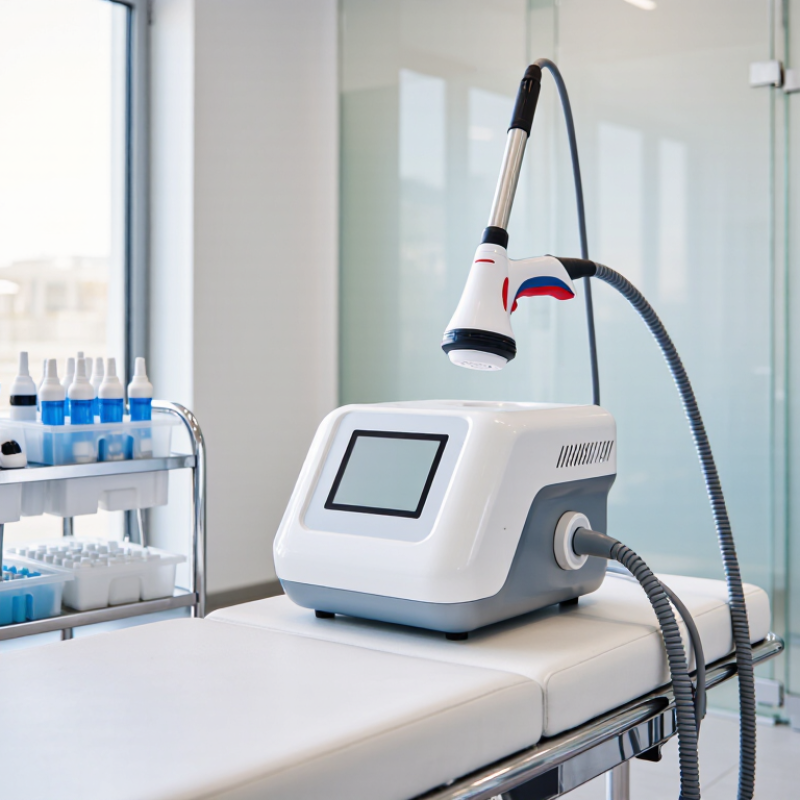
| Laser Technology | Identify the light source and intended hair-removal application. Common professional systems use diode laser wavelengths around 755 nm, 808 nm, or 1064 nm, while some systems combine multiple wavelengths. | Technical specification sheet, laser-source documentation, optical test report, and user manual describing the intended skin and hair types. | The stated wavelength, optical output, pulse mode, and intended use are consistent across the product label, manual, quotation, and test documents. | The supplier uses vague terms such as “three-wavelength technology” without identifying actual wavelengths, operating modes, or measurement conditions. |
| Output Consistency | Check whether the delivered energy remains stable during repeated pulses and across the treatment area. | Factory calibration records, energy-output test reports, acceptance-test procedures, and maintenance instructions. | Request measured results rather than marketing percentages. Test results should identify the instrument, test conditions, sampling method, and allowable tolerance. | Only nominal power is provided, with no information about pulse-to-pulse stability, calibration, or measurement uncertainty. |
| Fluence and Pulse Control | Review fluence, pulse duration, repetition rate, and operating modes. These parameters affect treatment suitability, comfort, and epidermal risk. | Complete parameter range, step size, preset logic, software screenshots, and a description of how the operator changes settings. | Parameters can be adjusted within clearly defined limits, and the manual explains how settings should be selected for different skin and hair characteristics. | The machine displays unusually broad ranges without test conditions, or allows high settings without access control, warnings, or operating instructions. |
| Spot Size and Applicator | Assess the treatment spot dimensions, handpiece ergonomics, optical window, cable construction, and connector durability. | Spot-size specification, optical-window material information, dimensional drawings, replacement-part list, and handpiece service procedure. | The actual spot size is stated in millimetres, remains uniform across the window, and is suitable for the intended treatment areas. | The supplier describes the spot as “large” or “fast” without providing dimensions or explaining whether the stated size is nominal or effective. |
| Cooling System | Verify contact cooling, air cooling, or other cooling technology, including temperature control and failure protection. | Cooling-system specification, temperature test data, coolant or filter maintenance instructions, and over-temperature alarm documentation. | The system monitors cooling performance and prevents or interrupts emission if the cooling function is outside its safe operating range. | Cooling performance is described only as “ice cooling” or “cold sapphire” without temperature limits, monitoring, or a maintenance plan. |
| Electrical Safety | Review protection against electric shock, abnormal operation, leakage current, grounding faults, and overheating. | Electrical safety test report from a competent laboratory and a declaration identifying applicable medical electrical equipment requirements. | The device is evaluated against applicable requirements of IEC 60601-1 or an equivalent recognized electrical-safety framework for the intended market. | The supplier provides only a generic “CE certificate” or a factory statement without a traceable test report and product model identification. |
| Laser Safety | Check emission control, key switch or access control, emergency stop, warning labels, interlocks, aiming beam, and protective eyewear. | Laser classification report, risk assessment, laser-safety test results, user manual, warning-label artwork, and eyewear specifications. | Safety features are documented and aligned with IEC 60825-1 and the device’s declared laser class and intended operating environment. | Protective eyewear is supplied without wavelength and optical-density information, or the machine can emit laser energy during a fault or unsecured startup. |
| Photobiological and Optical Risk | Assess risks from direct or reflected optical radiation, aiming beams, treatment windows, and unintended exposure. | Optical radiation risk assessment, protective-accessory specifications, and instructions for controlled treatment areas. | Operators receive clear instructions regarding treatment-room control, eye protection, reflective surfaces, and patient positioning. | The supplier claims that the treatment is “completely harmless” or does not provide contraindications and exposure precautions. |
| Software and User Interface | Examine user permissions, parameter limits, alarms, treatment records, language options, and protection against accidental activation. | Software description, alarm list, cybersecurity or access-control information where applicable, and screenshots of the operator interface. | The interface prevents invalid settings, displays active alarms clearly, and requires deliberate confirmation before laser emission. | Parameters can be changed without limits, alarms are unclear, or software functions shown during demonstrations are not included in the delivered model. |
| Biocompatibility of Patient-Contact Parts | Review materials that contact skin, including cooling windows, treatment tips, covers, and reusable accessories. | Material declarations and, where applicable, biocompatibility evaluation based on ISO 10993 principles for patient-contacting materials. | Contact materials are identified, cleanable, compatible with the stated disinfectants, and supported by appropriate biological-safety documentation. | The supplier cannot identify patient-contact materials or provides no cleaning and disinfection instructions. |
| Quality Management System | Determine whether the manufacturer controls design, purchasing, production, inspection, complaints, and corrective actions. | Current quality-management certificate, certificate scope, issuing body, audit validity, and site address matching the manufacturing location. | A medical-device quality system such as ISO 13485 is relevant to the product scope and applies to the actual manufacturing site. | The certificate belongs to a trading company, has an unrelated scope, is expired, or cannot be verified through the issuing body. |
| Regulatory Classification | Confirm how the device is classified in the destination market and whether the intended hair-removal claims are covered. | Regulatory classification rationale, technical file or submission information where permitted, intended-use statement, and market-specific registration details. | The regulatory pathway matches the product’s actual energy source, intended use, claims, and destination country. | The supplier treats a voluntary certificate, registration, or marketing document as proof of approval in every country. |
| European Market Documentation | For sales in the European Economic Area, verify whether the device falls under applicable medical-device legislation and whether the conformity route is appropriate. | EU Declaration of Conformity, applicable technical documentation, notified-body information when required, and product labeling. | The declaration identifies the exact model, applicable legislation, standards used, manufacturer, authorized representative where required, and conformity assessment route. | A self-designed “CE certificate” is offered without a Declaration of Conformity, or the certificate does not cover the exact product model. |
| United States Documentation | For the United States, distinguish between FDA establishment registration, device listing, clearance, approval, and enforcement status. | Official regulatory record for the exact device and intended use, plus labeling and any applicable clearance or authorization documentation. | The supplier clearly explains the regulatory status instead of claiming that registration alone means the device is “FDA approved.” | The supplier displays an FDA registration number as if it were product clearance or approval, or the listed device does not match the offered model. |
| Electromagnetic Compatibility | Check immunity and emissions so the machine does not create unacceptable interference or malfunction near other equipment. | EMC test report covering applicable medical-device requirements, test configuration, accessories, and product model. | Testing addresses the machine as delivered, including handpieces, power supplies, cables, and accessories that affect EMC performance. | Only a general household-electronics EMC statement is provided for a professional medical or aesthetic device. |
| Mechanical and Thermal Reliability | Evaluate enclosure strength, wheels, connectors, cooling fans, handpiece strain relief, operating temperature, and continuous-use capability. | Reliability or endurance test records, abnormal-operation tests, service intervals, and environmental operating specifications. | The supplier states realistic duty cycles, storage and operating conditions, and replacement intervals for wear components. | The machine is demonstrated briefly but no endurance data, duty-cycle limit, or thermal shutdown behavior is disclosed. |
| Calibration and Maintenance | Determine how energy output, temperature, sensors, and safety functions are checked after installation and during service. | Installation qualification checklist, calibration procedure, recommended service interval, calibration-tool requirements, and service records. | The supplier provides a documented calibration process and identifies which measurements must be performed by trained personnel. | The supplier says calibration is unnecessary for the life of the machine or cannot explain how output drift is detected. |
| Factory Acceptance Testing | Require testing before shipment for output, cooling, alarms, interlocks, emergency stop, display functions, and accessories. | Signed factory acceptance test, serial-number traceability, final inspection record, and shipment photographs or video when appropriate. | The acceptance report identifies the actual unit rather than showing a generic sample report for another machine. | The supplier refuses model-specific testing or will not record serial number, measured values, and test date. |
| Traceability | Check whether critical components and finished products can be traced through serial numbers, production batches, and service records. | Serial-number format, component traceability procedure, lot records, warranty registration, and complaint-handling process. | Critical optical, electrical, and cooling components can be linked to production and service documentation. | The same certificate or test report is used for multiple unrelated models without clear product identification. |
| Training and Clinical Use | Assess whether the supplier provides operator training on skin assessment, contraindications, patch testing, parameter selection, and adverse-event response. | Training syllabus, operator manual, treatment records, contraindication list, patch-test procedure, and emergency guidance. | Training emphasizes controlled use and patient screening rather than promising universal results for every skin and hair type. | The supplier promises permanent results, zero risk, or safe treatment for all users without discussing skin type, hair color, medication, or contraindications. |
| After-Sales Service | Review remote support, spare parts, repair capability, response time, software support, and local service coverage. | Warranty terms, service-level agreement, spare-parts list, repair workflow, escalation contacts, and support hours. | The contract states coverage for the laser source, handpiece, cooling system, power module, screens, and labor separately. | The warranty excludes most high-value components or depends on undefined “improper use” conditions. |
| Total Cost of Ownership | Calculate purchase price together with shipping, installation, training, consumables, preventive maintenance, replacement handpieces, and downtime. | Itemized quotation, spare-part pricing, expected service intervals, estimated shipping costs, and warranty exclusions. | The buyer can estimate cost per treatment and five-year ownership cost using documented assumptions. | The lowest purchase price is emphasized while replacement handpiece cost, service charges, and import responsibilities remain unclear. |
| Supplier Verification | Confirm whether the supplier is the actual manufacturer, an authorized distributor, or a trading intermediary. | Business registration, factory address, production photos or audit access, authorization letter where applicable, and consistent legal-entity information. | Company identity, manufacturing site, certificates, invoices, product labels, and bank details are consistent and verifiable. | The supplier changes legal entity names during the transaction or refuses a basic factory audit and document verification. |
| Recommended Supplier Score | Use a weighted evaluation rather than selecting solely by price or advertised power. | Completed technical questionnaire, document checklist, sample-machine inspection, reference checks, and a signed purchase specification. | Suggested weighting: safety and regulatory compliance 30%, output and cooling performance 25%, quality system and reliability 20%, service 15%, total cost 10%. | A supplier receives a high score based only on price, appearance, social-media reviews, or unverified certificates. |