Blog
Top Barley Grass Juice Powder Suppliers Worldwide?
Finding reliable barley grass juice powder suppliers worldwide requires more than comparing prices or reading polished product pages. This guide examines origin, cultivation, juice extraction, drying methods, testing standards, and supply consistency. A vivid green color may look impressive, but it does not prove freshness or nutritional quality. Buyers should request recent certificates of analysis, microbiological reports, pesticide screening, heavy-metal results, and clear batch information. Packaging also matters, especially when powder travels across humid climates and long shipping routes.
Dr. Ann Wigmore, a respected pioneer of living-food nutrition, said, “The food you eat can be either the safest and most powerful form of medicine or the slowest form of poison.” Her statement is broader than barley grass, yet it encourages careful decisions rather than blind enthusiasm. Barley Grass Juice Powder is not a cure, and supplier claims should remain proportionate to the available evidence. That distinction matters.
This overview compares international suppliers through a practical, evidence-focused lens. It considers farm traceability, organic certification, processing temperature, flavor, solubility, minimum order quantities, and customer support. Some suppliers disclose excellent testing records. Others provide attractive promises but limited documentation. That gap deserves attention.
No ranking is flawless. Supply chains change. Certification status can expire. Even a reputable company may experience a weak batch. Readers should verify current documents before placing an order, especially for commercial manufacturing. The strongest supplier is not always the cheapest. It is the one that communicates clearly, tests consistently, and accepts scrutiny.
What Is Barley Grass Juice Powder and How Is It Produced?
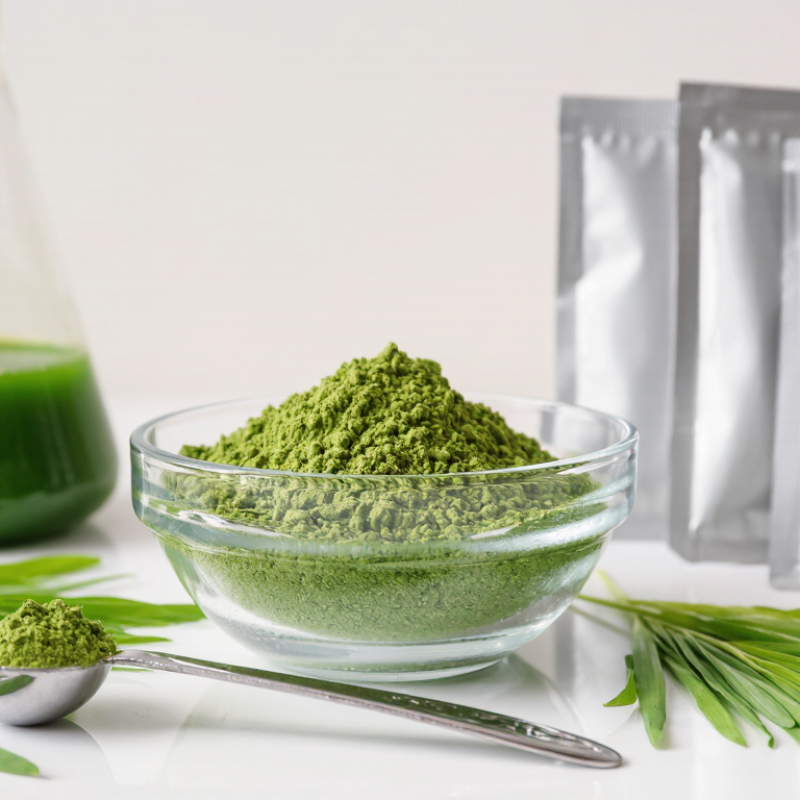
Barley grass juice powder comes from young barley leaves, not mature grain. Producers harvest the grass before seed formation, when its leaves are tender and rich in green plant compounds. The fresh leaves are washed, inspected, and pressed to separate juice from fiber. The liquid is then concentrated and dried into a fine powder. Spray drying is common, while low-temperature methods may better protect heat-sensitive components. However, “low temperature” alone does not prove superior quality.
Reliable suppliers usually document the crop location, harvest stage, and processing conditions. They should test moisture, microbial safety, heavy metals, pesticides, and identity. A clean production room matters, but traceable records matter more. In practice, powder color can range from bright green to olive green. Color alone is a weak quality measure. I would also check solubility, odor, packaging seals, and a recent certificate of analysis. Some suppliers provide impressive specifications but limited evidence. That gap deserves attention.
Tips: Ask whether the powder is juice-based or whole-leaf powder. Confirm the extraction ratio and carrier ingredients. Request batch-specific testing, not a generic report. Store unopened powder in a cool, dry place away from sunlight. After opening, use a dry spoon and reseal the pouch quickly. Suppliers serving international buyers should explain their food-safety controls and export documentation clearly. Even then, independent verification may be worthwhile, because supplier claims can be incomplete.
| Data Dimension | Worldwide Supplier and Product Information | Practical Relevance for Buyers |
|---|---|---|
| Product Definition and Raw Material | ||
| Product identity | Barley grass juice powder is a dried powder made from the liquid juice expressed from young barley leaves (Hordeum vulgare L.). It is different from ordinary barley grain flour and from whole-leaf barley grass powder. | Buyers should confirm that the specification refers specifically to juice powder rather than milled leaf powder or cereal grain ingredients. |
| Typical harvest stage | Young barley grass is harvested before the plant reaches full grain maturity. The exact cutting stage varies by grower, climate, cultivar, and processing specification. | Harvest timing can affect color, flavor, fiber content, moisture, and the concentration of plant compounds. |
| Common cultivation regions | Commercial supply can originate from temperate agricultural regions in North America, Europe, Oceania, and Asia. Actual origin depends on the supplier’s farming network and production site. | Request the country of cultivation, country of processing, lot traceability, and agricultural production method for every shipment. |
| Agricultural production methods | Raw material may be grown under conventional, organic, or other controlled farming systems, subject to local regulations and certification requirements. | “Organic” should only be accepted when supported by a valid certificate issued by an authorized certification body. |
| How Barley Grass Juice Powder Is Produced | ||
| 1. Cultivation | Barley seeds are sown, grown, irrigated as needed, and managed until the leaves reach the supplier’s defined harvest stage. | Growing conditions, irrigation quality, soil management, and agricultural controls influence raw-material consistency. |
| 2. Harvesting | Young leaves are cut and transported for processing. Shorter time between harvesting and processing generally helps limit quality deterioration. | Ask about maximum transport time, temperature control, and controls against foreign material after harvest. |
| 3. Washing and sorting | The harvested grass is commonly inspected and washed with potable or otherwise controlled water to remove soil and other physical contaminants. | Suppliers should provide sanitation procedures, water-quality controls, and foreign-material prevention records. |
| 4. Juice extraction | The cleaned leaves are mechanically pressed or otherwise processed to separate liquid juice from much of the fibrous plant material. | The extraction method affects yield, insoluble fiber, texture, color, and the final powder’s dispersibility. |
| 5. Filtration or clarification | The extracted juice may be screened, filtered, or clarified to reduce coarse particles before drying. The exact sequence differs among processors. | Confirm whether the product is clarified, filtered, or retained as a more complete juice fraction. |
| 6. Drying | The juice is converted into powder using a controlled drying process, commonly spray drying or freeze-drying. A carrier may be used in some spray-dried products to improve processing and powder flow. | Ask for the drying method, carrier declaration, processing temperature range, and finished moisture specification. |
| 7. Sieving and blending | The dried material may be milled or sieved for a consistent particle size and blended by lot to achieve uniformity. | Particle-size data and blend records help assess solubility, mouthfeel, and batch-to-batch consistency. |
| 8. Packaging and storage | The powder is packed in moisture- and oxygen-protective food-grade packaging and stored in a cool, dry, controlled environment. | Packaging should protect the product from humidity, light, oxygen, and contamination during transport and storage. |
| Supplier Regions and Commercial Formats | ||
| North America | Suppliers in this region commonly serve food, dietary supplement, and ingredient markets. Products may be offered as conventional or certified organic material, depending on the producer. | Useful for buyers seeking established documentation systems, regional warehousing, and access to North American regulatory support. |
| Europe | European suppliers typically emphasize traceability, food-safety management, contaminant control, and compliance with applicable European food regulations. | Verify compliance with the destination market because European food and supplement requirements differ by product category and country. |
| Oceania | Oceania-based supply may include raw-material cultivation and processing for export markets, with documentation covering origin, farming practices, and quality controls. | Confirm whether the supplier controls cultivation directly or purchases grass or juice from external farms. |
| Asia | Asian suppliers may provide bulk powder, private-label processing, or contract manufacturing. Quality systems and agricultural origins vary significantly by producer. | Independent testing, factory audits, and complete batch documentation are particularly important when comparing different facilities. |
| Common commercial pack sizes | Bulk formats may include sealed bags, lined cartons, or drums. Smaller quantities may be packed in pouches, jars, or sachets for retail or food-service use. | Pack size should match expected order volume, shelf-life requirements, humidity exposure, and distribution conditions. |
| Quality, Safety, and Purchasing Criteria | ||
| Identity and authenticity | Documentation should identify the botanical material as young barley leaf juice and distinguish it from wheatgrass, barley leaf powder, barley grain, or blended greens. | Request botanical identity testing, ingredient composition, allergen information, and a clear product specification. |
| Moisture and water activity | Low moisture and controlled water activity help reduce the risk of caking and microbial growth. Limits are product-specific and should be stated in the specification. | Compare actual batch results with the agreed specification rather than relying only on general claims such as “low moisture.” |
| Microbiological testing | Typical testing may include total aerobic microbial count, yeast and mold, and specified pathogens such as Salmonella and Escherichia coli, according to the destination-market requirements. | Obtain a recent certificate of analysis for the exact lot and confirm the laboratory method and acceptance criteria. |
| Contaminant control | Relevant controls may include heavy metals, pesticide residues, mycotoxins where applicable, foreign matter, and other contaminants required by the destination market. | Testing frequency should be risk-based and supported by supplier qualification, farm controls, and laboratory reports. |
| Color and flavor | Authentic barley grass juice powder is generally green to green-brown and has a characteristic grassy or vegetal flavor. Color can vary with cultivar, harvest stage, oxidation, and drying conditions. | Use agreed color, odor, flavor, and dispersibility standards for incoming inspection and batch approval. |
| Certificates and standards | Depending on the facility and market, suppliers may operate under recognized food-safety systems such as HACCP-based controls, GMP programs, ISO 22000, or third-party organic certification. | Check certificate scope, issuing organization, validity period, covered site, and whether the certificate applies to the specific product. |
| Shelf life | Shelf life is established by the manufacturer using product stability data and packaging performance. It is not identical for every powder or package format. | Request the stated shelf life, storage conditions, retain-sample policy, and stability or accelerated-stability evidence when available. |
| Regulatory and labeling review | Permitted claims, serving information, allergen declarations, novel-food status, and supplement requirements vary by destination country. | Review the formula and intended claims with qualified regulatory personnel before import, sale, or product launch. |
| Best supplier-selection approach | Compare suppliers using origin transparency, processing description, specification compliance, third-party testing, food-safety certification, minimum order quantity, lead time, packaging, and technical support. | A documented qualification process is more reliable than selecting solely on price, color, country of origin, or marketing language. |

Key Factors for Evaluating Global Barley Grass Juice Powder Suppliers
Top Barley Grass Juice Powder Suppliers Worldwide
Key Factors for Evaluating Global Barley Grass Juice Powder Suppliers
Choosing a global barley grass juice powder supplier requires more than comparing prices. Start by verifying botanical identity, cultivation location, harvest timing, and processing conditions. Freshly harvested barley grass should be handled quickly to protect color, aroma, and nutrient stability. Ask for a current certificate of analysis covering moisture, microbiological limits, heavy metals, pesticides, and identity testing. Documents matter. So does consistency.
Evaluate the supplier’s traceability system from seed to finished pouch. Reliable producers should explain drying temperatures, juice extraction methods, filtration, and storage controls. Request representative samples from different production lots, not only one attractive sample. Check solubility, flavor, color, odor, and sediment after mixing in cool water. A clean-looking powder is not proof of quality. I have found that packaging details are often underestimated; moisture barriers and lot coding can strongly affect shelf life. No supplier is perfect, so unanswered questions deserve attention.
Tips: Compare at least three suppliers using the same checklist. Review independent laboratory reports, audit records, and production capacity. Confirm whether certificates apply to the exact product and lot. Visit the facility when practical, or arrange a documented third-party audit. Be cautious with unusually low prices. They may reflect efficient sourcing, but they may also signal weaker testing or inconsistent raw materials. A thoughtful decision leaves a clear paper trail.
Leading Supplier Regions and Their Market Characteristics
Top Barley Grass Juice Powder Suppliers Worldwide?
Supplier regions strongly shape quality, pricing, and delivery reliability. China remains a major production center, supported by large agricultural areas and mature drying facilities. Suppliers there often offer competitive prices and flexible packaging. Buyers should verify pesticide reports, heavy metal testing, and batch traceability carefully.
India has growing barley cultivation and expanding botanical powder processing. Its suppliers may provide organic-oriented materials, but harvest consistency can vary by region and season. North American producers usually emphasize documentation, food safety systems, and domestic supply chains. Their prices are often higher, while communication and compliance records may be easier to manage. However, higher cost does not automatically guarantee better powder.
European suppliers commonly focus on certified sourcing, clean-label processing, and strict contaminant controls. Some rely on imported raw materials, so regional branding may not reflect the crop’s origin. Australia and New Zealand offer strong agricultural oversight and transparent production practices. Yet, smaller harvest volumes can create limited availability. This matters during long-term contracts.
A practical evaluation should compare juice extraction methods, moisture levels, mesh size, and storage conditions. Ask for recent certificates, not generic documents from previous seasons. Inspect whether the powder keeps a fresh green color and mild grassy aroma. Very bright color can be misleading. Regional reputation helps, but it cannot replace batch-level evidence. Suppliers sometimes provide excellent paperwork but weak sensory consistency. That gap deserves attention.
Quality Standards, Certifications, and Testing Requirements
When evaluating barley grass juice powder suppliers worldwide, quality begins with traceable cultivation. Experienced buyers should request the botanical name, growing region, harvest date, and processing method. Fresh green color alone proves little. I have seen attractive powders fail basic moisture tests.
Reliable suppliers should follow recognized food-safety systems, such as GMP, HACCP, or ISO-based controls. Organic certification may support farming claims, but it does not replace safety testing. Certification scope matters. Check the issuing body, certificate number, expiry date, and covered facility.
Each batch should have a current certificate of analysis. Testing should confirm identity, moisture, microbial limits, yeast, mold, and pathogens. Heavy metals and pesticide residues also require attention, especially when plants grow near industrial or heavily farmed areas. Screening for undeclared fillers or colorants can reveal adulteration.
Testing methods should name the laboratory, detection limits, and sample date. Independent laboratory verification is stronger than an unchecked supplier document. However, even third-party reports can contain sampling gaps. Ask how samples were collected and stored.
Keep that question visible. Supplier audits should review sanitation records, allergen controls, complaint handling, and recall procedures. Packaging should protect the powder from humidity, heat, light, and oxygen.
Lot codes must remain readable from warehouse receipt to final sale. Some documents may look complete but still lack meaningful evidence. That is where careful review matters.
How to Select the Right Supplier for Your Business Needs
Selecting a barley grass juice powder supplier requires more than comparing prices. The FAO Statistical Yearbook 2023 reports that global barley production has exceeded 150 million tonnes in recent years. This indicates broad agricultural supply, but it does not guarantee consistent grass quality. Ask where the grass is grown, when it is harvested, and how quickly it is processed. Fresh-cut timing matters.
Request a current certificate of analysis for every batch. It should cover moisture, microbial limits, heavy metals, pesticides, and active nutrient markers. Suppliers using HACCP or ISO 22000 systems offer stronger process control. Verify their audit records, traceability procedure, and recall plan. The Global Food Safety Initiative’s benchmarking framework also supports documented food-safety management. Do not rely on a polished sales sheet. I once overlooked packaging details; oxygen exposure can quietly damage color and flavor.
Tips: Compare three samples under the same test conditions. Check powder solubility, odor, color, and sediment. Confirm minimum order quantities, lead times, and storage temperatures. Ask for sealed retention samples. A low price may hide weaker testing or unstable supply. Yet, higher pricing alone proves nothing. An independent laboratory check is often worth the cost, especially before a long-term contract. Supplier selection should match your market, claim requirements, and production scale—not an impressive brochure.
Top Barley Grass Juice Powder Suppliers Worldwide? How to Select the Right Supplier for Your Business Needs
Barley production is a useful raw-material supply indicator when screening potential barley grass juice powder suppliers. The chart shows major barley-producing countries in 2022; it is not a ranking of individual suppliers. Final supplier selection should also consider organic and food-safety certifications, laboratory testing, traceability, minimum order quantity, lead time, and export capability.
Source: FAOSTAT, 2022 barley production data; figures are rounded estimates in million metric tonnes.